How CLAC Is Reshaping Union Representation Through Cooperation, Training, & Opportunity
In 1952, a small group of Canadian workers set out to build a fundamentally different kind of union. At a time when much of North America’s labour movement was defined by confrontation between workers and employers, the founders of the Christian Labour Association of Canada, better known as CLAC, believed there was an alternative approach to labour relations. Their vision was rooted not in class conflict, but in cooperation, human dignity, mutual respect, and the belief that workplaces function best when people work together rather than against one another.
More than 70 years later, that philosophy still defines one of Canada’s largest independent unions.
Today, CLAC represents workers across construction, transportation, healthcare, retail, manufacturing, and services. But while its footprint has expanded significantly since its founding, its leadership insists the core mission has not changed. The focus, CLAC leaders say, remains on helping Canadian workers build stable careers, support their families, access training opportunities, and succeed in a rapidly evolving economy.
At a time when Canada faces persistent skilled labour shortages, rising affordability pressures, housing challenges, and large-scale infrastructure demands, CLAC believes the role of unions is expanding beyond traditional bargaining.
It is, increasingly, about building long term opportunities for workers and prosperity for our country.
In an exclusive interview with Canadian Business Journal, Wayne Prins, CLAC’s Executive Director, and Nathan Mathews, Provincial Director (British Columbia), discussed the organization’s cooperative approach to labour relations, workforce development, Indigenous partnerships, and the future of worker representation in Canada.
“The starting point matters,” says Prins. “If you view the workplace as a collection of humans working together to achieve something, then you approach labour relations differently.”
That idea, he explains, is not abstract philosophy. It is the foundation of how CLAC approaches negotiations, training, and member support across the country.
A Different Philosophy of Union Representation
CLAC’s model is built around a simple but distinct premise: Cooperation in the workplace produces better long-term outcomes for workers than confrontation and adversarialism.
“If you view the workplace as a collection of people working together to achieve something, then you approach labour relations differently.”
— Wayne Prins, Executive Director, CLAC
Rather than treating labour relations as a zero-sum contest, the union emphasizes shared problem-solving between workers and employers. That approach, says CLAC leadership, is designed to produce more stable and positive workplaces, fewer work disruptions, and more consistent employment opportunities.
“Our agreements still include strong protections around safety, workplace culture, competitive wages, and benefits. The difference is in how we get there.”
—Nathan Mathews, Provincial Director
(British Columbia), CLAC
Nathan Mathews says that philosophy begins with listening.
“We don’t force a one-size-fits-all model,” Mathews explains. “We engage directly with workers and ask: What works for you?”
He says this flexibility allows agreements to reflect the realities of specific workplaces rather than imposing rigid frameworks that may not fit every industry or region.
In practice, CLAC argues that this approach often reduces conflict escalation. Instead of defaulting to power-based posturing, prolonged disputes, and work stoppages, the focus is placed on resolving issues at the workplace level whenever possible.
“Most problems can be solved on the ground when parties are willing to work collaboratively,” Mathews says.
That does not mean compromising core protections. CLAC leaders stress that wages, safety standards, and benefits remain central to every agreement.
“Collaboration doesn’t mean surrendering worker interests,” Mathews adds. “Our agreements still include strong protections around safety, workplace culture, competitive wages, and benefits. The difference is in how we get there.”
For CLAC, success is ultimately measured in outcomes: steady employment, career advancement, and long-term stability and security for members.
“There is no sense in being the highest paid unemployed worker,” Mathews says. “It’s far more beneficial to work together.”
Addressing Canada’s Skilled Labour Challenge
Few issues are more central to CLAC’s current strategy than Canada’s growing skilled labour shortage.
Across construction and industrial sectors, employers and governments alike are warning that retirements, rising demand, and limited training capacity could create long term workforce gaps that slow major infrastructure development. But CLAC leadership believes the most pressing issue is not only recruitment; it is retention.
“A lot of people enter the industry, but leave before completing apprenticeships,” says Prins. “Retention of workers in the skilled trades is a critical challenge to solve.”
To address this, CLAC has expanded apprenticeship support systems that follow workers from entry-level training through to certification and long-term employment. These programs include funding support, training coordination, mentorship, and help transitioning between jobs.
“When one job wraps up, we work hard to help members transition into the next opportunity,” Prins explains. “We’re trying to help people build long term careers, not just find the next job.”
A key feature of CLAC’s approach is its “wall to wall” membership model. Unlike traditional craft-based union structures that restrict workers to a single trade, CLAC allows members greater flexibility to develop multiple skills and certifications.
That flexibility has helped create a growing number of dual-ticketed workers, giving members broader career mobility while helping employers fill skills gaps across projects.
“Our agreements still include strong protections around safety, workplace culture, competitive wages, and benefits. The difference is in how we get there.”
—Nathan Mathews
“Our members are able to move between pathways and build multiple skill sets,” says Mathews. “That flexibility creates a competitive advantage for workers and allows them to stay employed longer.”
For CLAC, this is not just about efficiency. It is about building resilience in a workforce facing increasing economic uncertainty.
“In our efforts to meet the current and future demand for labour, we’re focused on skills development, multi skills development, and eliminating barriers that prevent people from entering and staying in the skilled trades,” Prins says.
Indigenous Partnerships and Economic Opportunity
CLAC’s collaborative model has also played a growing role in partnerships with Indigenous communities involved in major infrastructure and resource projects.
Working alongside the First Nations Natural Gas Alliance and project contractors, CLAC has focused on creating early employment pathways by engaging communities before construction begins.
Instead of waiting for hiring phases, the approach involves identifying workforce needs in advance, assessing training requirements, and building targeted programs that connect local workers directly to jobs.
“We’re not just training people for the sake of training,” says Mathews. “The goal is to help members of the local community land meaningful and sustainable jobs at the end of a training program.”
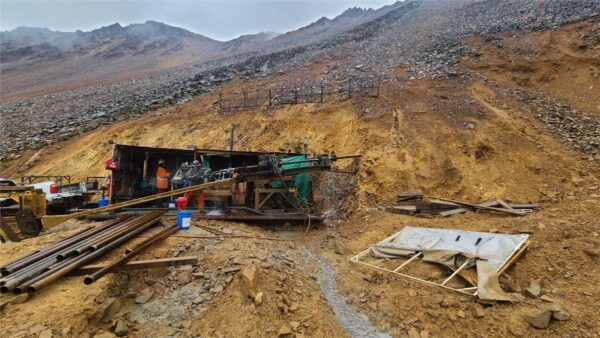
He points to projects such as Woodfibre LNG and mining developments in Western Canada, where early training programs have been used to prepare Indigenous workers for long term employment on site.
CLAC’s flexible structure also allows workers to explore different trades once they enter the workforce, which can be especially valuable in communities where access to diverse training pathways has historically been limited.
“A member can start as a labourer and then decide they want to become a carpenter or a pipe fitter,” Mathews says. “That flexibility has gone over extremely well in a number of Indigenous communities.”
In some cases, CLAC leaders say, rigid seniority- based systems have unintentionally limited local participation on projects taking place on Indigenous territory. The union argues its model allows for more responsive and locally tailored agreements.
“Our model allows us to create flexibility,” Mathews explains. “We were able to work with the owner and the Nations and say: We need to get people jobs.”
Independence and Worker Choice
CLAC’s independence from the Canadian Labour Congress is another defining feature of its identity, but leadership frames it less as separation and more as flexibility.
“We don’t value independence for independence’ sake,” says Prins. “We value the freedom to be who we are.”
That independence, he argues, allows CLAC to remain non-partisan, adapt bargaining strategies more freely, and design agreements that reflect specific workplace realities rather than broader political frameworks.
Prins also sees value in a competitive labour landscape.
“When unions have to demonstrate value to workers, it drives accountability and innovation,” he says. “Freedom of association only has meaning if workers actually have choices.”
CLAC is affiliated with the World Organization of Workers, an international network of unions that share common values and a similar approach to labour relations.
Preparing Workers for a Changing Economy
As automation, artificial intelligence, and digital technologies continue to reshape global industries, labour organizations are being forced to reconsider how they support workers through transition.
But in construction and skilled trades, Prins says the most immediate challenge remains workforce capacity rather than technological disruption.
“We engage the work of the union as an act of service to humans whose interests and needs are worthy of being advanced.”
—Wayne Prins
“Construction is being impacted by technology,” he says, “but not to the same degree as many other sectors. Right now, our biggest concern is developing and retaining skilled workers to meet the needs of Canada’s economy.”
That includes continued investment in apprenticeship completion, skills development, and reducing barriers to entry into the trades.
At the same time, CLAC acknowledges that workers across Canada are facing broader pressures, including affordability challenges, housing constraints, and evolving job expectations.
“These are going to be very busy years,” Prins says. “Workers in Canada are facing many challenges, and all of these challenges are better addressed when workers have strong representation in their workplace.”
A Mission Focused on Canadian Workers
CLAC today positions itself as an alternative voice within Canada’s labour movement, defined less by opposition and more by outcomes that directly affect workers’ lives. Its leaders describe its purpose in practical terms: helping workers build sustainable careers, supporting communities, and providing stability in an economy marked by uncertainty and change.
That mission is reflected in its work across apprenticeship programs, Indigenous partnerships, customized agreements, and long-term workforce development strategies, all aimed at a single through line: helping Canadian workers succeed.
“We are very optimistic about the coming years,” says Prins. “We think we are extremely well-positioned to grow not just in size, but in influence and impact for workers across the country.”
In an era defined by economic pressure and rapid transformation, CLAC argues that the future of labour representation will rely less on confrontation and more on collaboration that translates into lasting and meaningful opportunity.
For Canadian workers, the organization says, that distinction is not theoretical. It is practical.